
Major home upgrades are rarely isolated decisions. A new bathroom, improved comfort systems, exterior work, or energy upgrades all affect one another in ways that aren’t obvious at first. Many homeowners approach renovations one project at a time, only to discover later that earlier decisions created limitations, unexpected costs, or rework.
The most expensive mistakes usually don’t come from poor workmanship. They come from poor sequencing, unrealistic budgets, and decisions made without a full understanding of how one upgrade influences another. Planning ahead—before spending significant money—can dramatically reduce stress, delays, and wasted investment.
This guide walks through how homeowners can think strategically about major upgrades, prioritize work intelligently, and avoid the most common pitfalls that turn improvement projects into long-term headaches.
Clarifying Upgrade Goals Before Spending Any Money
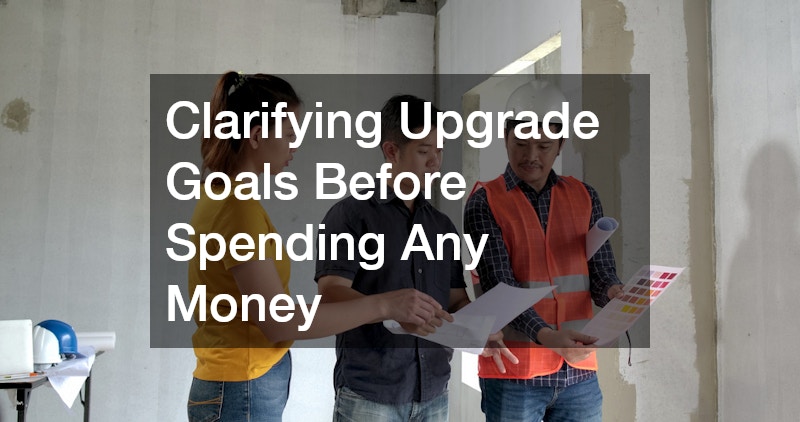
Before choosing materials, requesting quotes, or committing to timelines, homeowners need clarity on why they are upgrading in the first place. Projects driven purely by impulse or short-term trends are far more likely to lead to regret.
Some homeowners plan upgrades because they intend to sell within a few years. Others are focused on long-term livability, aging in place, or accommodating a growing family. These goals directly influence which projects make sense and how much flexibility is needed.
Professionals like home builders often approach projects with a whole-home mindset, considering structure, flow, and future adaptability rather than individual rooms. Homeowners can benefit from adopting a similar perspective even when tackling upgrades gradually.
Helpful questions to ask early:
- Is this upgrade about comfort, value, safety, or efficiency?
- Will the home’s use change over the next 5–10 years?
- Are there projects that should logically come first?
- What decisions would be hard or expensive to undo later?
When goals are clearly defined, it becomes easier to say no to upgrades that don’t align and to prioritize those that support long-term plans.
Understanding the True Financial Impact of Large Home Projects
Budgeting for major upgrades requires more than tallying contractor quotes. Homeowners often underestimate the financial ripple effects of renovations, especially when projects involve financing or significantly increase property value.
Using a home loan to fund improvements can provide flexibility, but it also introduces long-term considerations. Monthly payments, interest rates, and future borrowing capacity all deserve attention before committing to large-scale work.
Similarly, upgrades that materially change a home’s value can affect home insurance rates. Higher replacement costs, new features, or expanded square footage may require policy updates to ensure adequate coverage.
Key financial factors homeowners should evaluate:
- Total project cost, including permits and contingencies
- Impact on monthly cash flow if financing is used
- Insurance adjustments required after completion
- Long-term operating costs and maintenance
Separating what is affordable from what is financially comfortable helps prevent overextension and preserves flexibility for future needs.
Why Structural Problems Should Always Come First
One of the most common—and costly—mistakes homeowners make is prioritizing cosmetic upgrades before addressing underlying structural issues. New flooring, fresh paint, and updated fixtures can dramatically improve how a home looks, but they do nothing to stop ongoing movement, settling, or deterioration beneath the surface.
Structural problems rarely remain static. What starts as a small crack or slight slope can worsen over time, especially when additional weight or stress is introduced through renovations. Cosmetic improvements applied on top of unresolved issues often need to be repaired or replaced far sooner than expected, turning what should have been a long-term investment into a recurring expense.
Recognizing Early Warning Signs Inside the Home
Issues like uneven floors, wall cracks, or misaligned doors are often dismissed as cosmetic quirks or signs of an older home. In reality, they can be early indicators of deeper concerns affecting the home’s stability.
Common warning signs include:
- Floors that slope or bounce noticeably
- Cracks that widen over time or reappear after repair
- Doors and windows that stick or won’t stay aligned
- Gaps between walls, ceilings, or trim
When these symptoms are present, surface-level fixes are unlikely to last. In some situations, house leveling services are required to stabilize the structure before any additional work can proceed safely or predictably.
How Structural Movement Undermines Renovations
Even minor structural movement can undermine renovations in ways that aren’t immediately obvious. Tile may crack, grout lines may separate, cabinetry can shift, and fixtures may lose alignment. These failures often appear months or years after a project is completed, long after warranties or workmanship guarantees expire.
Ignoring structural issues often leads to:
- Damage to new finishes as materials flex or shift
- Reduced lifespan of renovations that should have lasted decades
- Increased repair costs later when multiple layers must be removed
- Compromised safety due to ongoing instability
These outcomes aren’t just frustrating—they’re expensive. Homeowners end up paying twice for the same upgrade, once to install it and again to fix or replace it.
The Financial Case for Early Structural Corrections
Addressing structural concerns early may feel like an unwelcome expense, especially when the issues aren’t highly visible. However, it is often the most cost-effective decision in the long run.
Early intervention:
- Prevents damage to future upgrades
- Reduces the scope of necessary repairs
- Simplifies planning for subsequent projects
- Provides predictable conditions for contractors
Once a home is stabilized, other upgrades become more straightforward. Measurements stay accurate, finishes perform as intended, and the risk of unexpected failure drops significantly.
Creating a Reliable Base for Future Improvements
Addressing structural concerns first creates a solid foundation—literally and figuratively—for all future upgrades. It allows homeowners to move forward with confidence, knowing that their investments are supported by a stable base.
When structure is sound:
- Cosmetic upgrades last longer
- Planning becomes more accurate
- Maintenance costs decrease
- Safety and comfort improve
Rather than delaying visible improvements, tackling structural issues first protects them. It ensures that money spent on aesthetics enhances the home instead of being put at risk by problems hidden beneath the surface.
Planning Interior Renovations With Long-Term Use in Mind

Interior renovations are often driven by aesthetics, but functionality should carry equal weight. Spaces that look beautiful but fail to meet daily needs quickly become sources of frustration.
Bathrooms, in particular, experience heavy daily use and moisture exposure. Working with experienced bathroom remodelers often highlights practical considerations homeowners might overlook, such as ventilation, storage, and layout efficiency.
When planning interior upgrades, homeowners should think beyond current preferences:
- Will the layout still work in 10 years?
- Are materials durable and easy to maintain?
- Does the design support accessibility if mobility changes?
- Are plumbing and electrical systems being updated alongside finishes?
Thoughtful planning reduces the likelihood of needing major revisions and helps ensure renovations add lasting value rather than short-lived appeal.
Improving Comfort Without Overhauling the Entire Home
Comfort upgrades are often assumed to require full system replacements, but that isn’t always the case. Strategic improvements can deliver meaningful results without the disruption and cost of a complete overhaul.
Targeted work through residential hvac services can address airflow issues, zoning inefficiencies, or aging components without replacing everything at once. In some homes, adding a split air conditioner to specific areas improves comfort dramatically while preserving the existing system.
Smart comfort planning includes:
- Identifying rooms with inconsistent temperatures
- Evaluating insulation and airflow before replacing equipment
- Coordinating upgrades with other renovations
- Balancing upfront cost with long-term efficiency
By focusing on problem areas instead of blanket solutions, homeowners can improve comfort while maintaining control over budget and disruption.
Evaluating Energy Upgrades for Realistic Payback
Energy efficiency upgrades are appealing, but not all improvements deliver the same return. Homeowners often assume savings will be immediate and substantial, only to discover that payback timelines vary widely.
Installing a residential solar panel system can reduce utility costs and increase energy independence, but outcomes depend on factors like roof condition, orientation, local incentives, and household energy usage.
Before committing to energy upgrades, homeowners should:
- Evaluate current energy consumption patterns
- Assess roof age and structural readiness
- Understand maintenance and replacement costs
- Compare projected savings against upfront investment
Energy upgrades are most effective when integrated into broader renovation plans rather than added as isolated projects.
Coordinating Exterior Improvements to Avoid Redundant Costs
Exterior projects are often scheduled reactively—driveway repairs after damage, landscaping after construction, or paving once access becomes inconvenient. This piecemeal approach frequently leads to redundant costs.
Working with an asphalt paving contractor is far more efficient when exterior work is coordinated with other projects. Heavy equipment, material deliveries, and drainage considerations all benefit from consolidated planning.
Smart exterior coordination includes:
- Scheduling paving after major construction is complete
- Accounting for drainage and grading changes
- Protecting finished surfaces during interior work
- Planning access routes for contractors
Bundling exterior upgrades reduces disruption, prevents damage, and often lowers overall costs.
Protecting the Home From Long-Term Maintenance Risks
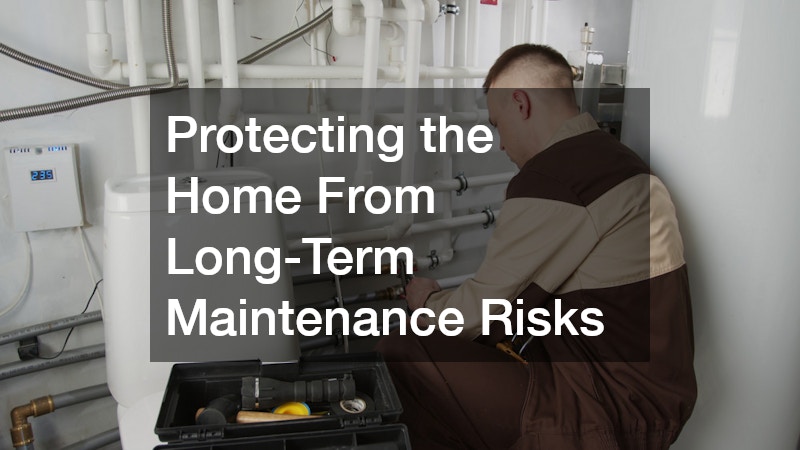
Major upgrades can inadvertently introduce new maintenance risks if prevention isn’t part of the plan. Open walls, disturbed soil, and new penetrations can all create vulnerabilities.
Proactive residential pest control planning during renovations helps prevent infestations that might otherwise go unnoticed until damage occurs. Sealing gaps, managing moisture, and choosing durable materials all contribute to long-term protection.
Preventive strategies homeowners should consider:
- Inspecting vulnerable areas after construction
- Sealing entry points created during upgrades
- Addressing moisture and ventilation issues
- Scheduling routine maintenance after project completion
Preventive planning is rarely visible, but it delivers some of the highest long-term value of any upgrade.
Why Decision Fatigue Is One of the Biggest Hidden Risks
Large upgrades require dozens—sometimes hundreds—of decisions. Some are obvious, like layout changes or finish selections. Others feel minor in isolation but add up quickly: fixture placement, scheduling trade access, approving substitutions, responding to unexpected issues. Without structure, decision fatigue can set in, leading to rushed choices, second-guessing, and regret that lingers long after the work is finished.
Decision fatigue doesn’t just affect aesthetics. It often leads to:
- Approving changes without fully understanding long-term impact
- Choosing “good enough” options just to move forward
- Overlooking how one decision affects another project phase
- Feeling overwhelmed and disengaged halfway through the process
When homeowners reach this point, projects tend to drift. Timelines slip, costs creep upward, and communication becomes reactive rather than intentional.
Understanding How Disruption Compounds Over Time
Many homeowners underestimate how disruptive projects can be, especially when multiple upgrades overlap. Living through construction is mentally and physically taxing, even when everything goes according to plan. Noise, dust, limited access to rooms, and a constant stream of questions can wear people down faster than expected.
Professionals like home builders often emphasize realistic timelines and clear decision points for this reason. The goal isn’t just efficiency—it’s sustainability. A project that moves too aggressively can exhaust homeowners before it’s complete, increasing the likelihood of poor decisions later on.
Disruption tends to compound when:
- Multiple trades are working in the same space
- Temporary workarounds become long-term inconveniences
- Schedules change frequently without clear communication
- Homeowners feel pressure to make immediate decisions
Acknowledging disruption as a real cost—not just an inconvenience—helps homeowners plan more realistically.
Front-Loading Decisions to Reduce Stress Later
One of the most effective ways to reduce decision fatigue is to make as many choices as possible before work begins. While it may feel tempting to “decide as you go,” that flexibility often backfires once the project is underway.
Front-loading decisions allows homeowners to:
- Think clearly without time pressure
- Compare options side by side
- Understand how choices interact across the project
- Reduce interruptions once work starts
This doesn’t mean every detail must be locked in, but major elements—layouts, materials, fixtures, and sequencing—should be resolved early. Doing so frees mental bandwidth later, when unexpected issues require attention.
Building Realistic Timelines With Built-In Flexibility
Even well-planned projects encounter delays. Materials arrive late, inspections take longer than expected, or hidden issues surface once walls are opened. Problems arise when timelines are so tight that any delay causes stress and cascading changes.
Creating buffer time isn’t about lowering standards—it’s about protecting decision quality.
Effective timelines account for:
- Inspection and approval delays
- Material lead times
- Weather-related disruptions
- Human factors like fatigue and availability
When buffers exist, homeowners are less likely to feel forced into snap decisions just to keep things moving.
Avoiding the Trap of Overlapping Major Projects
It’s often tempting to bundle multiple high-impact projects together to “get everything done at once.” While this can make sense in some cases, overlapping too many disruptive upgrades often backfires.
High-impact projects—those that affect daily living, utilities, or access—compound stress when stacked. Instead of saving time, they can increase confusion, slow progress, and elevate the risk of mistakes.
Spacing projects strategically helps:
- Maintain livable portions of the home
- Reduce coordination complexity
- Preserve mental energy for critical decisions
- Improve overall quality of execution
Sometimes the most efficient plan on paper is not the most manageable plan in real life.
Recognizing When to Pause Instead of Pushing Forward
One of the hardest skills for homeowners to develop is knowing when to pause. Momentum can feel reassuring, especially after time and money have already been invested. But pushing forward while overwhelmed often leads to outcomes that don’t align with original goals.
Pausing doesn’t mean abandoning progress. It means:
- Taking time to reassess decisions already made
- Clarifying priorities before proceeding
- Addressing unresolved issues instead of layering over them
- Regaining a sense of control
A short pause can prevent long-term dissatisfaction and costly revisions later.
How Pacing Protects Both Results and Well-Being
A well-paced project protects both the home and the homeowner’s peace of mind. When decisions are structured, timelines are realistic, and disruption is acknowledged rather than minimized, homeowners stay engaged and confident throughout the process.
Good pacing:
- Preserves decision quality from start to finish
- Reduces emotional burnout
- Improves communication with everyone involved
- Leads to outcomes that feel intentional, not rushed
Ultimately, managing timing and decision fatigue isn’t just about efficiency. It’s about creating an upgrade experience that homeowners can navigate thoughtfully—without sacrificing clarity, comfort, or long-term satisfaction.
Planning major home upgrades is less about choosing the “right” projects and more about choosing the right order . When homeowners think holistically—considering structure, finances, comfort, efficiency, and long-term maintenance—they dramatically reduce the risk of costly mistakes.
Upgrades should improve daily life, not introduce ongoing stress. With careful planning, realistic expectations, and thoughtful sequencing, homeowners can invest in their homes confidently and enjoy the benefits for years to come.