Moss may give a roof a rustic appearance, but allowing it to spread can create problems that affect both your roofing materials and your home’s protection. Because moss retains moisture and can grow beneath shingles, it is important to address the issue carefully rather than using aggressive cleaning methods that may cause additional damage.
A professional approach focuses on removing existing growth while protecting the roof’s surface. By understanding why moss develops and how it should be treated, homeowners can make informed decisions about maintaining a cleaner, healthier roof.
Understand Why Moss Is Growing on Your Roof
Moss commonly develops in areas that receive limited sunlight and remain damp for extended periods. Roof sections beneath overhanging trees or surrounded by dense vegetation may dry more slowly after rain, creating conditions that encourage growth.
Fallen leaves, pine needles, and other debris can also trap moisture against the roofing surface and provide an environment where moss can establish itself.
As moss spreads, its root-like structures can work their way around roofing materials. On shingle roofs, this growth may lift edges and hold water against the surface. Repeated moisture exposure can contribute to premature deterioration, especially when the problem is left untreated through multiple seasons.
Before attempting removal, it is helpful to determine how extensive the growth has become. A small amount of surface moss may require a different approach than widespread growth covering large portions of the roof. A qualified roofing contractor can inspect the affected area and identify whether moss has contributed to damaged, loose, or deteriorated materials that need attention before or during the cleaning process.
Remove Moss Carefully to Protect Roofing Materials
One of the most important considerations during moss removal is avoiding methods that damage the roof. High-pressure washing, for example, can dislodge protective granules from asphalt shingles, force water beneath roofing materials, or cause other unnecessary wear. A roofing contractor will generally recommend using an approach appropriate for the specific roofing material rather than treating every roof with the same cleaning method.
Gentle removal may involve applying a suitable moss treatment and allowing it time to loosen or kill the growth before it is carefully cleared away. The exact process can vary depending on the roof’s material, age, condition, and slope. Harsh scraping should also be avoided because pulling aggressively at established moss can damage shingles or other roofing components.
Safety is another major factor. Roof work involves fall risks, particularly when the surface is wet or covered with moss. Moss can make already sloped surfaces more slippery, and attempting to reach difficult areas without proper equipment can lead to serious accidents. For extensive growth or hard-to-access sections, professional service may be the safer option.
Homeowners should also avoid assuming that every cleaning product is appropriate for every roof. Some chemicals can affect roofing materials, surrounding plants, gutters, or other exterior surfaces if they are improperly selected or applied. Reading product directions and considering the roof’s specific construction is essential before beginning treatment.
Prevent Moss From Returning After Removal
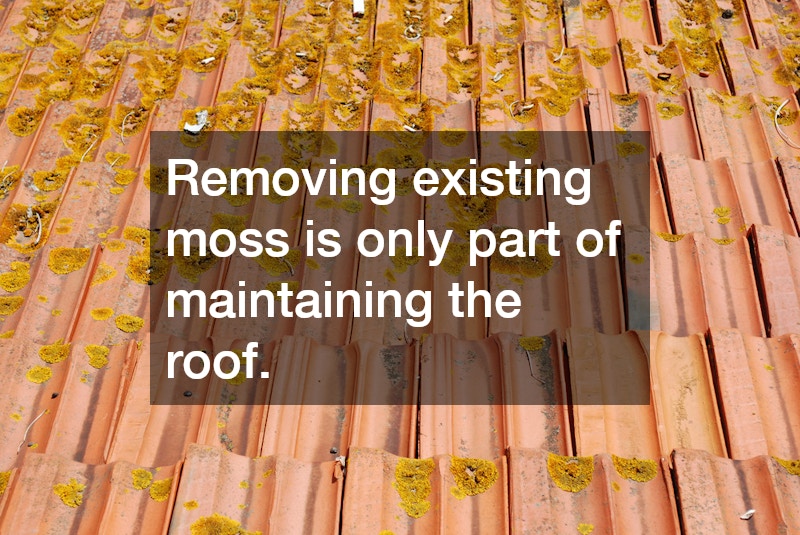
Removing existing moss is only part of maintaining the roof. Prevention begins with limiting the moisture and debris that support future growth. Trimming branches that heavily shade the roof can increase sunlight exposure and improve drying conditions. Keeping leaves, needles, and other organic material from building up can also reduce places where moisture remains trapped.
Regular roof and gutter maintenance can make it easier to identify conditions that encourage moss before growth becomes widespread. When water does not drain properly or debris remains in roof valleys, damp areas may persist longer than expected. Periodic inspections allow homeowners to notice these concerns and address them before they contribute to larger maintenance issues.
Working with a roofing contractor for periodic inspections can help homeowners develop a maintenance strategy based on their property’s specific conditions. Factors such as nearby trees, roof orientation, local weather patterns, and the type of roofing material can all influence how frequently moss develops and what preventive measures are most effective.
Moss removal should be handled with the same care as any other form of roof maintenance. Using gentle methods, correcting moisture-related conditions, and addressing damaged materials when needed can help protect the roof without creating additional problems. When moss growth is extensive or the safest removal method is unclear, professional guidance can help ensure the job is completed appropriately.